


Press

2026-07-01
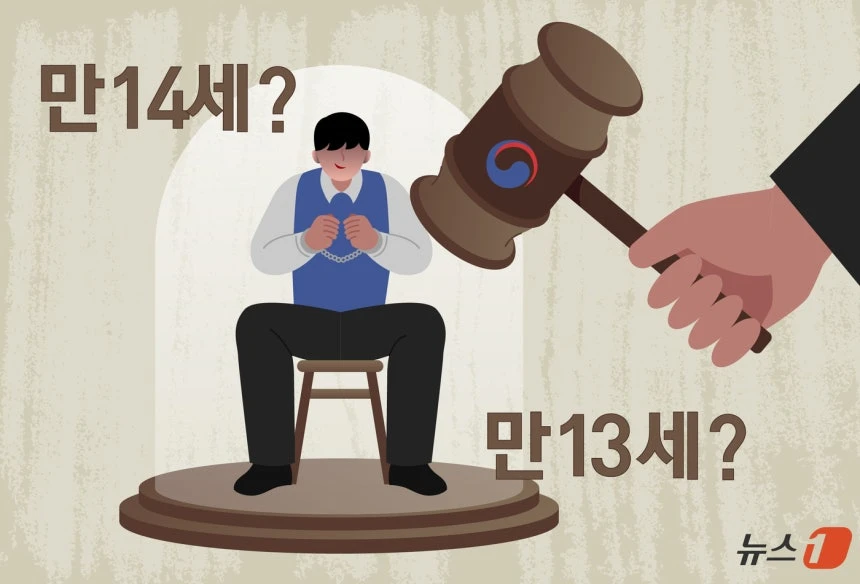
'Group sexual assault case' Busan High Court: "Being a juvenile limits how much the sentence can be raised"
Quasi-juvenile ratio up 2.2-fold in 5 years, recidivism rate 3 times that of adults
As the government pushes a plan to lower the age for quasi-juveniles to under 13, debate is growing over the balance between stronger punishment and correction and rehabilitation. Busan's education circle, legal community, and experts all agreed on the need to lower the age while emphasizing that supplementing the prevention and correction system must go together.
According to a compilation of News1 reporting on the 30th, the Ministry of Gender Equality and Family and the Ministry of Justice are recently coordinating a government recommendation that would conditionally lower the quasi-juvenile age standard. The plan is to adjust, from the current 'under 14' to 'under 13,' the standard for not being subject to criminal punishment in the case of serious crimes such as murder and sexual offenses.
In Busan, too, social debate over juvenile violent crime is continuing. On the 24th, Criminal Division 2 of the Busan High Court (presiding judge Park Woon-sam) raised, above the original sentence, the terms of the two main juvenile offenders in the appellate trial of a group sexual assault case targeting a fellow student.
The bench, mentioning that the victim had gone through a school transfer and dropping out after the incident and is still receiving psychiatric treatment, pointed out, "It reminds me of the drama 'True Education.' Shouldn't it have been the perpetrator, not the victim, who transferred schools?"
It added, "The fact that the defendants are juveniles imposed limits on dramatically raising the sentence."
According to the Ministry of Justice, the ratio of quasi-juveniles among juvenile probation subjects increased 2.2-fold in 5 years, from 5.2% in 2020 to 10.6% in 2024. The ratio of quasi-juveniles among juvenile reformatory inmates also rose 2.9-fold over the same period, from 3.1% to 6.1%. The recidivism rate of juvenile probation subjects was tallied at 12-13%, about 3 times that of adults.
Busan's education circle also stated its position that reducing juvenile crime is difficult through stronger punishment alone, and that prevention-centered policies must be pursued together.
The Busan Teachers' Union issued a commentary asserting, "The reason the public demands lowering the quasi-juvenile age is distrust caused by the absence of state function and the education authorities' show-for-show administration."
It then emphasized that the following must be pursued together: △large-scale investment in prevention and correction/rehabilitation △early detection of at-risk students within schools △strengthening probation △expanding the treatment and educational functions of juvenile reformatories and juvenile classification review centers.
Experts agreed on the need for stronger punishment while viewing the fundamental solution as strengthening the correction system.
Jeon Seong-gyu, a director at the Korea Psychological Science Center, assessed that, as juvenile crime patterns have changed due to media development and the like, partially lowering the quasi-juvenile age can be an alternative that reflects reality.
However, he suggested, "Because juvenile crime involves a complex interplay of immature psychology and the social environment, punishment alone has limits," adding, "strengthening the correction system—such as customized education, recidivism prevention programs, and the probation system—must go together."
Kim Dae-won, a Daeryun LLC attorney who has mainly handled school violence cases, viewed lowering the quasi-juvenile age limited to serious crimes as an institutional improvement reflecting the changed social environment that will have a certain degree of effectiveness.
At the same time, he said that since juvenile justice is a system that prioritizes re-socialization, its basic purpose must be maintained, stating, "Stronger punishment and prevention/correction are tasks that must be pursued together."
He added, "Strengthening school violence prevention education, counseling, and character education, and building a prevention system in which parents, schools, and the community participate together, will in the long term help prevent recidivism and secure public safety."
Reporter Park Seo-hyun (wiseh@news1.kr)
[Read Full Article]
'Lowering the Age for Quasi-Juveniles'…"Punishment Alone Has Limits; Prevention and Rehabilitation Must Go Together" (Go to Article)
All fields At a glance
1/0
Visit Consultation Booking
If you have legal concerns, consult a Litigation Involving Foreign Nationals specialist at a nearby office.

