


Press

2026-07-20
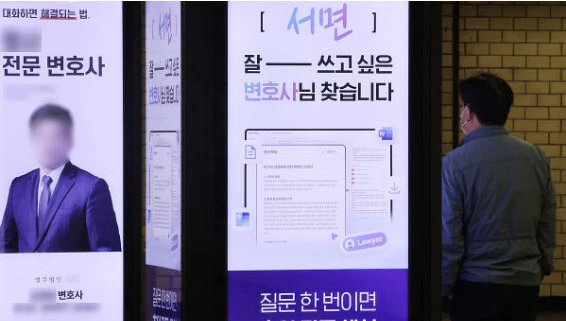
Future & Digital: The Courtroom Changed by AI
(1) The Age of Verification - Lawyers' Edition
How will artificial intelligence (AI) change jobs? The place that offers a preview of that future is the legal profession. Everything in litigation is text. Records piled up from complaints, briefs, and rulings responded fastest to generative AI, which handles language. In that it is a high-income, coveted profession, changes in the legal field are also a preview for white-collar work as a whole. Over three months, The Hankyoreh met with some 20 people—judges, lawyers, legal scholars, and law school students—and listened to their thoughts on the courtroom and work that AI has changed, and the concerns of the next generation.
Attorney Cho Young-gon (law firm Daeryun; former head of the Seoul Central District Prosecutors' Office), during his days as a prosecutor, first battled the records whenever he took on a major case. Only after spending "a full week with all his might" reading the records of a corporate case, in which years of accounting data and emails were tangled together, could he devise an investigation strategy. Now his law firm is different. "If we mobilize our AI, it takes less than an hour. Even 100,000 pages of accounting data are done in a few minutes. It's the effect of running twenty junior lawyers at the same time."
Where did the time saved that way go? Attorney Cho gave an unexpected answer. "Because the lawyer grasps the content of the case quickly and accurately, there's room to approach the client emotionally. In the past, there was a time when clients would doubt, 'Why does he know so little about my case?'—and as that time of distrust disappeared, the relationship got much better."
"The common sense that held until last year has been broken"
Change came silently. Attorney Cho Kwang-hee (law firm One), in his 30th year, one day noticed that his juniors' briefs looked different. "The quality, volume, and coherence of the drafts shot up. I thought, 'Have these young folks gotten better?'—but it was AI."
Even after ChatGPT appeared at the end of 2022, skepticism dominated the legal field, with people saying "there are too many hallucinations to use it." That mood was overturned only recently. Attorney Kang Min-koo (law firm Dowul), a former senior judge of the Seoul High Court, said, "Even if you add up all the progress of the past three years, it doesn't match the change of the last few months."
At 68, he is one of the legal field's foremost early adopters. On his desk run Gemini, Claude, Grok, and Perplexity, plus law-specialized services Superlawyer and Lbox. Subscription fees alone come to 800,000 won a month. "Once you use them, you're in a different world." His method is also unusual. He entrusts even the design of the instruction (prompt) to AI, then feeds that instruction into several AIs simultaneously and re-integrates the four outputs. "A prompt a human spoke in words and a prompt AI designed produce results as different as heaven and earth."
At the opposite end is the generation that began their legal careers together with AI. Attorney Ko Ji-chul (Lawbax Law Office), in his 30s, first encountered ChatGPT in 2023, two months before the bar exam. To him, starting work in an office without senior mentors, AI was both a substitute for apprenticeship training and his only colleague.
He had AI learn the format and style of 30–40 briefs he had written, and each time he revises a draft, he feeds the revised version back in. Then AI answers, "So you revised it this way. I'll reflect that going forward." It is repetitive work to tame his writing style. To him, AI is not a "one-click" button but a debate partner. "I ask, as if addressing a colleague, 'I want to emphasize this part—are there any usable precedents?' Rather than getting faster, the quality improved dramatically. Writing time decreased, but time spent reading and thinking increased."
"Verification" became a new professional ethic
In a structure where a person is responsible for what AI wrote, verification became the lawyer's duty. Attorney Ko cited his experience with a case involving an accounting appraisal. When you feed data into the program, the appraisal materials come out right away, but the job wasn't over. "Whether the results are correct, whether they're logically valid, and which figure among the various valuation methods appropriately reflects this company's value—I had to judge all of that. The work of entering data decreased, but the work of judging didn't decrease at all."
Veterans each have their own verification techniques. Attorney Kang Min-koo likened this to a "moat." Just as you dig a waterway around a castle to keep out enemies, you must build a fence so AI cannot make things up. "Hallucinations are, in large part, the questioner's fault. When asking about precedents, you must dig a moat by verifying through a law-specialized service equipped with domestic precedent data."
Where does that verifying power come from? Attorney Cho Young-gon's answer is, paradoxically, the most analog. "You must cultivate your own reading power, analytical power, and thinking power that can verify AI." Attorney Ko Ji-chul reaches the same conclusion. "The ability to doubt ultimately comes only from the experience of doing it yourself from beginning to end."
Then do lawyers who use AI actually win more? A study conducted by the legal AI platform Lbox with the research team of KAIST professor Oh Won-seok found that the more actively a lawyer used AI, the significantly higher the win rate, and for the brief-writing function, the win rate rose in stepwise fashion as usage increased. But there was a peak. The win rate was highest in the 20–35% usage range, and beyond that, the curve bent downward. The winning side was not the lawyer who left everything to AI, but the lawyer who knew how to blend AI with their own judgment.
There is one more twist. AI is commonly regarded as a weapon of the younger generation, but in the same study, the proportion who answered that "work time was reduced by 45 minutes or more" was highest, at 40%, in the senior lawyer group. This means that the more one knows the legal reasoning and context, the greater the leverage. Attorney Cho Kwang-hee's testimony agrees. "Even in fields I haven't handled, after a few Q&A exchanges with AI, the structure gets drawn in my head. For people with experience and seniority, it's an extremely useful tool." The generation that hand-searched precedents in libraries 30 years ago now holds a master key that opens every field.
A blessing for veterans, a disaster for juniors
Attorney Kang Min-koo's forecast is blunt. "Look at the screen and just speak, and AI creates the documents. It's as if I've gained an alter ego that works 24 hours. For partner-level lawyers who have reached mastery, it's a blessing. The problem is the remaining 90%. For them, it's close to a disaster."
Signs are showing up as numbers in the United States. A survey by the legal-market analysis firm "Firm Prospects" showed that in 2025, hiring of junior lawyers at U.S. law firms fell 5% from the previous year, and among all hires, law school graduating-class candidates accounted for only 38%. The firm analyzed that the rise of AI is having a negative impact on demand for new personnel.
AI shakes the ladder that juniors climb up on. Precedent searches and drafting were both the livelihood and the training process of new lawyers. Attorney Cho Kwang-hee reminisced, "In the past, when a senior revised with a red pen or the word-processor function, the junior learned writing and logic in that process. Now, since a polished draft comes from the start, the learning process is skipped." The worry of Professor Ko Hak-soo of Seoul National University Law School touches the same spot. "Law firms don't invest unless they see a return on investment. So who will create the opportunities to build up the next generation of lawyers' capabilities?"
Where will a law firm with no juniors find its partner lawyers 10 years from now? No one has the answer to this question.
Reporter Jung Eun-joo ejung@hani.co.kr
[View Full Article]
A Records Review That Would Take a Week, AI Does in an Hour... "The Effect of Using 20 Junior Lawyers" (Go to link)
All fields At a glance
1/0
Visit Consultation Booking
If you have legal concerns, consult a Litigation Involving Foreign Nationals specialist at a nearby office.

