The drug that was clinically tested and prescribed at my father's hospital was made by my son's company.
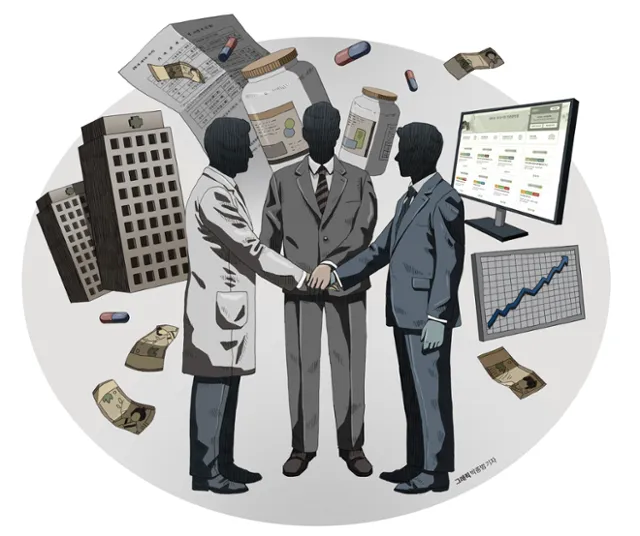
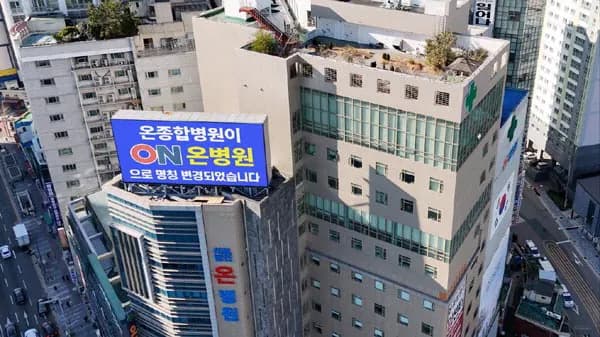
[Trade in health]<1> Hospital A in Seoul, known as the mecca of suspicious love triangle clinical trials, is suspected of violating the Pharmaceutical Affairs Act and Fair Trade Act by pushing drugs manufactured by a representative pharmaceutical company. Hospital A: "Preferential treatment? Side effects? No problem." Everyone knows about Hospital A in Seoul. It is a comprehensive secondary general hospital designated by the government that is responsible for essential local medical care. The size is also considerable. According to data received by Democratic Party lawmaker Seo Mi-hwa's office from the Korea Health Industry Development Institute, the hospital's revenue last year amounted to 162.5 billion won. A The hospital is called the 'holy ground of clinical trials.' Clinical trials are research activities conducted on humans (patients or healthy adults) to confirm the safety and effectiveness of medicines. Among them, Hospital A is a leader in 'bioequivalence testing' (generic drug clinical trials), which determines whether generic drugs (generics) show the same efficacy as existing drugs (original drugs). As it is a sacred place, the number of tests performed is unrivaled. Hankook Ilbo checked the number of generic drug clinical trials reported to the Ministry of Food and Drug Safety from 2021 to August of this year, and 569 (39.6%) of the total 1,437 cases were at Hospital A. There was a significant gap between us and Hospital B, which ranked second (386 cases, 26.9%). Our pride is also great. On the hospital's clinical trial center website, there is a phrase that says, "We have been leading the development of domestic clinical trials." They added that it is a “world-class clinical trial institution” and “groundbreaking efforts and progress.” The clinical trial center's annual sales are said to be about 20 billion won.There's a reason it's doing wellClinical trials are subject to approval by the Ministry of Food and Drug Safety. It may be necessary to have sufficient facilities and professional personnel, such as a medicine storage room. As of last September, there were about 208 approved clinical trial conducting institutions across the country. How did Hospital A become the overwhelming leader in clinical trials for generic drugs? The industry cites three main reasons. The first is facilities and manpower. Generic drug clinical trials are tests that compare the efficacy of existing drugs whose patents have expired with those of generic drugs. It is important to statistically confirm to what extent the absorption rate in the body is equivalent to that of existing drugs. Therefore, the external conditions of participants, such as sleeping, waking up, and eating, must be controlled. Medication and blood collection must also be performed simultaneously. This means that lodging, lodging, and management personnel are essential. Hospital A is one of the few hospitals that can afford these. Since opening the clinical research center in 2011, it has been expanded and expanded more than three times. The medical staff is also said to be specialized in clinical trials of generic drugs. Hong Jeong-hee, director of the Drug Efficacy Equivalence Department at the Ministry of Food and Drug Safety, said, “The concentration of hospitals in certain hospitals means, in other words, that the hospitals in question are skilled in clinical trials of generic drugs.” Price competitiveness and location cannot be ignored. Tertiary hospitals, such as university hospitals, mainly conduct clinical trials for severe and rare diseases. It is difficult and expensive. On the other hand, clinical trials for generic drugs only need to check the absorption rate in the body. It is less than half the price compared to university hospitals. A pharmaceutical company official said, “In the case of Hospital A, the cost is around 200 million won.” The hospital's location in Seoul, within a 200-meter radius of a subway station, also serves as an advantage in recruiting test participants.My son's medicine is undergoing clinical trials at his father's hospital.However, what the industry is really paying attention to is the unique ‘clinical trial ecosystem’ centered on Hospital A. This is because the business structure that hospitals have built over several years is designed to maximize ‘their profits.’ The key is the Chairman of the Board of Hospital A. He is one of the leading figures in the medical field, having served as president of the Korean Hospital Association and president of the Korea Small and Medium Hospital Association. As the head of a public institution under the current government, he was often in the spotlight due to his close relationship with former President Yoon Seok-yeol. The first son is the director of the hospital and the second son is the director of the administrative center. The head of the administrative center is the vice president. Of course, there is no reason to view family management as strange. However, when Pharmaceutical Company I appears, the picture changes significantly. I Pharmaceutical Company was created by the chairman of the hospital's board of directors by acquiring an existing pharmaceutical company in 2019, and is still the largest shareholder (holding 21.03%). The CEO is the chairman's second son, who also owns 8.92% of the stock. Hospitals and pharmaceutical companies have a 'push and pull relationship' with each other through clinical trials. The father's hospital is in charge of all clinical trials conducted by the son's pharmaceutical company. Since June 2020, pharmaceutical companies have registered a total of 13 clinical trials for generic drugs with the Ministry of Food and Drug Safety, and all of them were conducted at the father's hospital. The second son also serves as the administrative director at the hospital. The administrative director is responsible for the hospital's clinical trial center. This means that clinical trials for the drug he created are being conducted at a hospital under his jurisdiction.After clinical trials... Dad's hospital purchases son's medicine in bulkAdhesion continues after clinical trials. Analyzing data obtained by Hankook Ilbo from the Ministry of Food and Drug Safety, data submitted by the Health Insurance Review and Assessment Service (HIRA) and the National Health Insurance Service to Rep. Seo Mi-hwa's office, and prescription records from Hospital A, Pharmaceutical Company I received approval from the Ministry of Food and Drug Safety for a total of 32 prescription drugs and over-the-counter drugs from 2020 until recently. And half of them (at least 15) were supplied to Hospital A. The proportion of items was about 46.9%. The amount of prescriptions was also not small. The father's hospital was found to have prescribed at least 600,000 tablets of the son's pharmaceutical company's products within the hospital alone. It is mainly used to promote gastrointestinal motility and relieve inflammation and pain. The amount of outpatient prescriptions was higher than this. During the same period, hospitals prescribed at least 879,000 out-of-hospital medicines (approximately 209,000 in 2021, 330,000 in 2022, 300,000 in 2023, and 40,000 in 2024). The number of out-of-hospital patients per day is said to be around 1,000 to 1,500. As a result of Hankook Ilbo checking eight pharmacies within a 500-meter radius of Hospital A, two pharmacies had records of prescribing reflux esophagitis drugs from Pharmaceutical Company I. The hospital's 'push' was focused on the early stage of the pharmaceutical company's business (2021-2022). 37.4% of the total prescriptions in 2021 and 28.1% in 2022 were prescribed at my father's hospital. This figure is based on the specifications submitted to the HIRA. This means that the actual hospital prescription rate may be higher. A person who knows the hospital situation well said, "I understand that Pharmaceutical Company I mainly produced drugs used in Hospital A," and added, "I think they wanted the money to circulate 'within the family.'" As a result, Pharmaceutical Company I grew rapidly in a short period of time. Sales, which were about 1,356.82 billion won in 2020, increased about 13 times in four years to about 17.2 billion won last year. A pharmaceutical industry official said, “For a new pharmaceutical company to break into a large hospital is in itself a ‘tremendous achievement.’” Hospital A, however, said, “What we purchased from Pharmaceutical Company I are inexpensive medicines that are routinely prescribed, such as gastric mucosa protectors.”Hospital A says “no problem”, is that really true?A Hospital says there is no problem, but is that really the case? This paper asked 22 experts from the medical, legal, and academic fields. They first pointed out the problem of conflict of interest. Clinical trial-related laws, such as the 'Rules on the Safety of Medicines, etc.', require sponsors (pharmaceutical companies, etc.) and implementing agencies (hospitals, etc.) to keep each other in check to properly verify drug effects and side effects. This is because if one person is in charge of both the client and the implementing agency or is involved in a family relationship, it is difficult to properly keep checks even for their own economic interests. An official at a clinical trial center in Gyeonggi-do said, "If the researcher conducting the clinical trial is under conditions to be influenced by the foundation (hospital) and the chairman, there is a high possibility that bias will occur." If checks are not made, the rights of participants will be violated to that extent. For example, if a problem is discovered during a clinical trial, the trial should be stopped immediately and reported. However, in a structure like Hospital A, there is a high possibility that the problem will be neglected or covered up. Park Eun-jeong, a researcher at the Korea Institute of Health and Medical Research, said, “With this structure, it is difficult to properly respond to problems that arise.”Many people are in violation of current laws such as the Pharmaceutical Affairs ActIt is interpreted that there is ample scope to view it as a violation of current laws such as the Pharmaceutical Affairs Act. Lee Seo-hyeong, head of the Daeryun Medical Pharmaceutical Group at the Daeryun Law Firm and an advisory lawyer for the Ministry of Food and Drug Safety, pointed out, “If the clinical trial sponsor and the implementing organization are in fact the same entity, but the clinical trial report was written with concealment and the drug product approval was obtained from the Ministry of Food and Drug Safety, this may constitute a violation of the Ministry of Food and Drug Safety (obstruction of official duties) that interferes with the review work of the Ministry of Food and Drug Safety.” A hospital’s purchase of a pharmaceutical company’s product may be viewed as a violation of the Fair Trade Act. Kim Seong-jin, a representative lawyer at K&L Law Firm and a former member of the Fair Trade Commission, said, "(The chairman and son) are related persons under the Fair Trade Act," and added, "Consignment and consignment of clinical trials and purchase of medicines can be interpreted as acts of unfair support." Group leader Seo-Hyung Lee said, “The act of entrusting a clinical trial can be interpreted as compensation for prescribing the company’s medicine, that is, an economic benefit (kickback), and in this case, the chairman’s family can be accused of breach of trust and Pharmaceutical Company I can be accused of breach of trust.” Hospital A strongly refutes this claim. Regarding the conduct of the clinical trial, he said, "Pharmaceutical Company I entrusted the clinical trial to Hospital A because it is an excellent and trustworthy institution. The clinical trial is carried out professionally and independently by six doctors from Hospital A, so it cannot be considered a conflict of interest." Regarding the purchase of medicines, he denied the possibility of preferential treatment, saying, "The Pharmacist Committee, composed of 10 expert members, is in charge of selecting and managing medicines." The person in charge of operating the hospital's clinical trial center said, "Clinical trials are conducted under the supervision of the Ministry of Food and Drug Safety, and since there is a separate clinical trial analysis agency, issues of concern such as concealment of side effects cannot occur."[View full article]
Hankook Ilbo - The drug that was clinically tested and prescribed at my father's hospital was made by my son's company (link)
Hankook Ilbo - Suspicious clinical trial ecosystem between father and son... The No. 1 recruiting company is also closely ‘on our side’ (link)


![7년째 잠든 의료데이터 5000만건…디지털헬스케어법이 깨운다 [대륜의 Biz law forum]](/_next/image?url=https%3A%2F%2Fd1tgonli21s4df.cloudfront.net%2Fupload%2Fboard%2Fbroadcast%2F20251110122629378.webp&w=828&q=75)
![7년째 잠든 의료데이터 5000만건…디지털헬스케어법이 깨운다 [대륜의 Biz law forum]](/_next/image?url=https%3A%2F%2Fd1tgonli21s4df.cloudfront.net%2Fupload%2Fboard%2Fbroadcast%2F20251110122629378.webp&w=3840&q=75)