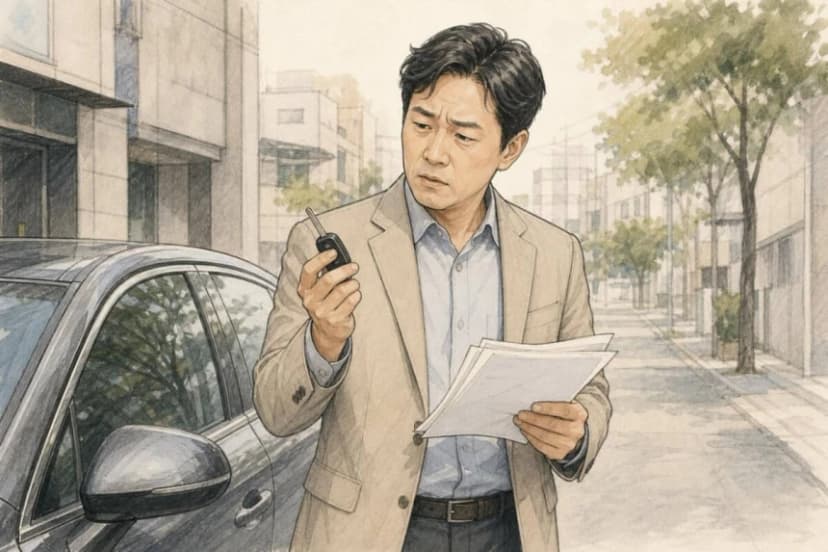
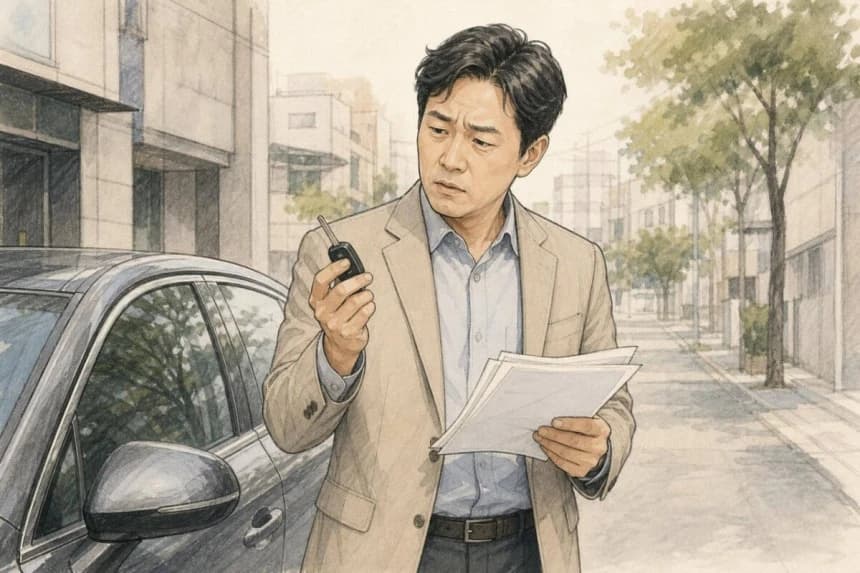
With the Prosecution–Police Investigation Power Realignment, Attorneys Face a 'New Normal' Too... "The Starting Point of Judgment Must Be Built at the Investigation Stage"
Interview with attorneys Park Gyu-seok & Yang Gi-yeon of Daeryun Law Firm- To overturn a non-referral decision, you ultimately have to fight the 'police record'... "Evidence has a golden time too"- Shift to an era of building evidence from the very start of the investigation: "Not just disputing, but intervening is required" Under the amendment to the Criminal Procedure Act that passed the National Assembly plenary session last month, prosecutors' direct investigation authority is set to be fully abolished this coming October. The structure in which prosecutors directly conducted supplementary investigations disappears, changing to a method of 'requesting' supplementary investigation from judicial police officers. However, even if a complainant or victim files an objection to the police's non-referral decision, that judgment inevitably starts from the records and evidence already created at the police investigation stage.Since the procedure by which a prosecutor directly examines a case and finds evidence has essentially disappeared, the common analysis in the legal community is that the conclusion of a case is determined at the police investigation stage. We met with attorney Park Gyu-seok of Daeryun Law Firm, who has prosecutorial experience and has handled many criminal cases in practice, and attorney Yang Gi-yeon, who leads the Daeryun Evidence Investigation Center, to hear about the defense counsel's role and evidence-securing strategies in the changing investigation environment.Attorney Park Gyu-seok said the direction of the early investigation has become even more important. Attorney Park said, "Even though the objection system exists, its success or failure ultimately depends on how precisely you rebut the non-referral reasoning statement and how much of the evidence missed early on you can supplement," adding, "Unlike the past, when cases were re-contested at the prosecution stage, the center of gravity of defense is now shifting toward intervening at the very moment the police investigation record is being created."So how does what the defense counsel actually does for a party facing a police investigation change? Attorney Park Gyu-seok explained, "You first check the complaint or the alleged facts to pinpoint the issues, secure as much objective material related to the case as possible before questioning, and, if necessary, line up witnesses who will give favorable statements in advance," adding, "Taking preservation measures for materials that easily disappear—like CCTV, messenger records, and call logs—and organizing in advance the questions and answers likely to come up in the actual questioning to prepare the client is what defense counsel must do before questioning." He also advised that an objection to a non-referral decision should be drafted in accordance with the form prescribed by the Police Investigation Rules so that it can work favorably in acceptance and subsequent response.Attorney Park Gyu-seok particularly emphasized that, amid such change, evidence has an 'expiration date.' He said, "CCTV is overwritten with other footage in as little as two weeks and at most within about a month, dashcams also have limited storage, and mobile phone messages or call logs can likewise be difficult to preserve depending on the other party or the carrier," adding, "Even witnesses' memories fade over time, so, in effect, before disputing legal principles, the fight against time begins first."Attorney Yang Gi-yeon likewise said, "The first thing clients who have been reported or accused ask in a consultation is 'Is the CCTV still there?'," adding, "Not only CCTV but also dashcams, entry records, card payment histories, location information, messenger and email, original photos and videos, hospital treatment records, witness statements, and even taxi or delivery order records—the scope of materials to secure before they disappear is far broader than one might think."He continued, "You must request cooperation from the building management office or nearby shops to receive materials in the form of original files, and clearly record the circumstances of acquisition and their originality, so that they carry weight as evidence when later submitted to the investigative agency," and "If the party finds it difficult to secure the materials directly or there is a possibility they will soon be deleted, we also review the procedure of applying to the court for evidence preservation to compel that the materials are not arbitrarily discarded."The two attorneys then said that raising an objection to investigation and filing an objection to a decision need to be examined separately. Attorney Yang said, "If, after an investigation has begun, no substantive investigation such as evidence examination proceeds for six months or more without justifiable reason, the complainant and others can raise an 'objection to the investigation,'" adding, "The remedy procedure for a non-referral is an 'objection to the decision,' and one must bear in mind that it has a three-month limit."He also emphasized the importance of evidence preservation. This is a procedure whereby, when there is a concern that evidence will disappear if one waits for the formal procedures of the investigative agency or court, one requests the judge to examine the evidence in advance and preserve the result. According to attorney Yang, merely claiming to have 'seen the CCTV' and securing the material through legal procedure to publicly record its existence and content differ in their very probative force in later litigation. He said, "The more the material holder refuses to cooperate or the more imminent the deletion time, the more swiftly one must decide even on filing for evidence preservation."Attorney Yang Gi-yeon cited as an actual example the case of a client who, after drinking with acquaintances, was reported on the spot for indecent assault by force. He said, "The CCTV the police initially secured only captured up to the scene of the party leaving the bar," adding, "Our Daeryun Evidence Investigation Center, which received the urgent request, additionally secured the CCTV of the alley between the two locations before the footage was deleted, and since that footage fully captured the movement path before and after the alleged time of harm, we were ultimately able to conclude the case with a non-referral."Attorney Park Gyu-seok then said this case starkly illustrates the current investigation environment in which prosecutors' direct investigation authority has been abolished. He emphasized, "It is a case where whether or not you secured one more piece of CCTV in the initial response completely changed the conclusion of the case," and "Securing evidence—whether physical evidence or statements—before it disappears will be the most important process in preparing for the new 'investigation new normal.'" [Read Full Article]
With the Prosecution–Police Investigation Power Realignment, Attorneys Face a 'New Normal' Too... "The Starting Point of Judgment Must Be Built at the Investigation Stage" (Go to)






![[로펌 iN] 대륜, 배진철 전 공정거래조정원장 영입](/_next/image?url=https%3A%2F%2Fd1tgonli21s4df.cloudfront.net%2Fupload%2Fboard%2Fbroadcast%2F20260825022554707.webp&w=828&q=75)
![[로펌 iN] 대륜, 배진철 전 공정거래조정원장 영입](/_next/image?url=https%3A%2F%2Fd1tgonli21s4df.cloudfront.net%2Fupload%2Fboard%2Fbroadcast%2F20260825022554707.webp&w=3840&q=75)




![[법률돋보기]⑫ 사무장병원, 환수보다 무서운 행정처분…초기 대응이 관건](/_next/image?url=https%3A%2F%2Fd1tgonli21s4df.cloudfront.net%2Fupload%2Fboard%2Fbroadcast%2F20260821043246495.webp&w=828&q=75)
![[법률돋보기]⑫ 사무장병원, 환수보다 무서운 행정처분…초기 대응이 관건](/_next/image?url=https%3A%2F%2Fd1tgonli21s4df.cloudfront.net%2Fupload%2Fboard%2Fbroadcast%2F20260821043246495.webp&w=3840&q=75)
![[기고] 45년 만의 유류분 대수술…달라지는 상속 설계의 핵심은?](/_next/image?url=https%3A%2F%2Fd1tgonli21s4df.cloudfront.net%2Fupload%2Fboard%2Fbroadcast%2F20260820122150067.webp&w=828&q=75)
![[기고] 45년 만의 유류분 대수술…달라지는 상속 설계의 핵심은?](/_next/image?url=https%3A%2F%2Fd1tgonli21s4df.cloudfront.net%2Fupload%2Fboard%2Fbroadcast%2F20260820122150067.webp&w=3840&q=75)