[Exclusive] Shinyoung Securities, executives and employees suspected of ‘insider trading’… Buying stocks at a low price in the name of a family member
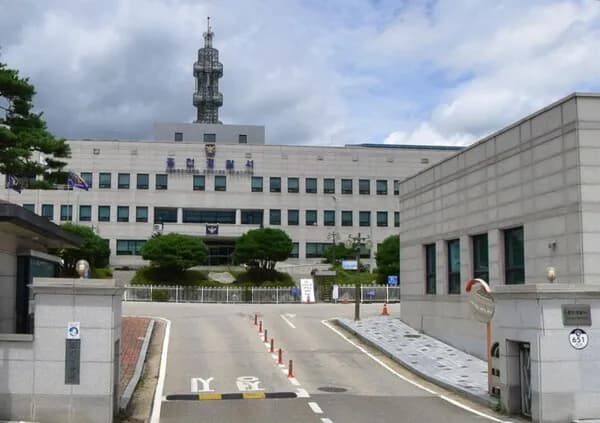
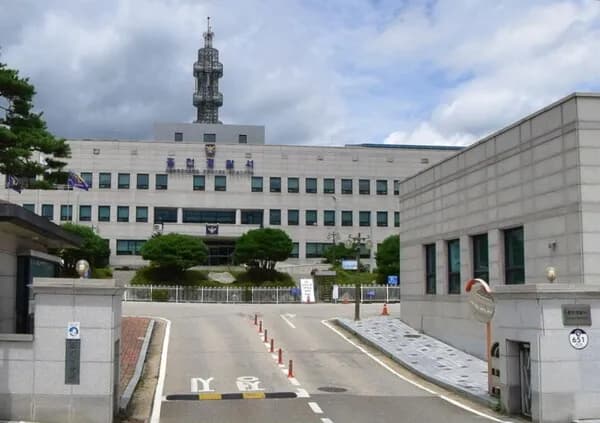
“The fact of whether it is RCPS or common stock has nothing to do with the application of Article 54, Paragraph 1” Shinyoung Securities “Ordinary transaction in line with market price… Not subject to application as an unlisted company” Controversy has arisen after it was revealed that executives and employees used internal information to purchase stocks of startup companies in which Shinyoung Securities had invested in the past in the name of their family members at low prices. Shinyoung Securities maintains that “it is not subject to the Capital Markets Act as it is an unlisted company,” but controversy is growing over whether it violates the Capital Markets Act, with some pointing out that this is an act of financial institution executives and employees taking unfair profits by using internal information. The company in question is Aall Korea, which manufactures metal-organic framework (MOF), a new dehumidifying and antibacterial material. In November 2021, Aall Korea attracted a total of KRW 22 billion in new stock investments from K-Net Unicorn Development Investment Association (KRW 4 billion), Woori Shinyoung Growth Cap No. 1 Private Equity Partnership (KRW 6.5 billion), Shinyoung Securities (KRW 1.5 billion), and NH-Iris ESG New Technology Investment Association (KRW 10 billion). Woori Shinyoung Growth Cap No. 1 is a private equity fund (PEF) established by Woori PE and Shinyoung Securities in 2018, and is currently a financial industry-based investment asset management company with Shinyoung Securities as the representative. In July 2021, the same year, Shinyoung Securities decided to invest 13,428 shares in Aol Korea at 595,800 won per share, worth about 8 billion won. However, during this process, it was confirmed that on June 28, 2021, a Shinyoung Securities executive used internal information to purchase 200 shares of common stock in the name of his family at 350,000 won per share. Then, on July 30, 2021, another employee also purchased 800 shares of common stock at the same price in the name of his spouse. This is about 40% lower than Shinyoung Securities’ official investment price. After the incident occurred, Shinyoung Securities did not file a separate complaint with the Financial Supervisory Service, but only punished the relevant officers and employees with a ‘salary reduction’ in accordance with internal ethical standards. Shinyoung Securities' position is, "We don't know how the executives and employees knew about it and bought the stocks." A Shinyoung Securities official said, "As a result of the investigation from a risk perspective, what Shinyoung Securities acquired was RCPS (Redeemable Convertible Preferred Stock), and what the employee purchased was common stock, which was a normal transaction that matched the market price at the time." He added, "Because it is an unlisted company, it is not subject to the Capital Markets Act." Despite this explanation, the legal community believes that it is difficult to avoid suspicion of violating the Capital Markets Act, as it is judged that executives and employees of the financial institution pursued unfair profits by utilizing internal information. Attorney Ji Min-hee of Daeryun Law Firm said, “For Article 54, Paragraph 1 of the Capital Markets Act to be applied, the following requirements must be met: ‘He must be an executive or employee of a financial investment business, the information must have been known in the course of his duties, the information must have not been disclosed to the outside, and the information must have been used for his/her own/third party’s benefit.’ In this case, since the executive or employee used internal information to purchase the product at a low price in the name of a family member, he or she may be held liable for violating Article 54 of the Capital Markets Act and the obligation to prohibit the use of job-related information.” explained. He continued, “The fact of whether it is RCPS (Redeemable Convertible Preferred Stock) or common stock has nothing to do with the application of the above provisions, and whether it is a reasonable price must be examined. However, even if it is a fair price, it does not affect the fact that internal information was used. Regarding the use of internal information, the decision is made by taking into account various circumstances such as the impact/contribution of the relevant information on the judgment and decision regarding the transaction, the economic situation of the relevant person, the transaction period, and the form or method of the transaction.” In addition, “In the case of Article 174 (prohibition of use of undisclosed important information) of the same Act, the principle is that Article 174 does not apply because it is an unlisted corporation. However, if the unlisted corporation is scheduled to be listed within 6 months or is scheduled to merge with a listed corporation, Article 174 applies,” he said. “Even if it is a corporation to which Article 174 applies, as in the judgment of Article 54 above, common stocks and whether they are at a fair price are important to be undisclosed in and of themselves.” “It does not affect the decision on whether to use the information,” he said.[View full article]
[Exclusive] Shinyoung Securities, executives and employees suspected of ‘insider trading’… Purchase of stocks at a low price in the name of a family member (link)

![보건의료 데이터 금광 쌓아두고 못 쓰는 韓…패러다임 전환 필요 [대륜의 Biz law forum]](/_next/image?url=https%3A%2F%2Fd1tgonli21s4df.cloudfront.net%2Fupload%2Fboard%2Fbroadcast%2F20250817115128071.webp&w=828&q=75)
![보건의료 데이터 금광 쌓아두고 못 쓰는 韓…패러다임 전환 필요 [대륜의 Biz law forum]](/_next/image?url=https%3A%2F%2Fd1tgonli21s4df.cloudfront.net%2Fupload%2Fboard%2Fbroadcast%2F20250817115128071.webp&w=3840&q=75)
![[단독] 신영증권, 임직원 '내부자 거래' 의혹…가족 명의로 헐값에 주식 매입](/_next/image?url=https%3A%2F%2Fd1tgonli21s4df.cloudfront.net%2Fupload%2Fboard%2Fbroadcast%2F20250814073535011.webp&w=828&q=75)
![[단독] 신영증권, 임직원 '내부자 거래' 의혹…가족 명의로 헐값에 주식 매입](/_next/image?url=https%3A%2F%2Fd1tgonli21s4df.cloudfront.net%2Fupload%2Fboard%2Fbroadcast%2F20250814073535011.webp&w=3840&q=75)